Yeehat Valley
The Call of the WildYeehat Valley is the decisive wilderness setting of Buck’s final transformation. It is the place where John Thornton dies, where Buck mourns beside the pool, and where the arrival of the wolf pack gives the valley a new social order. After Buck joins the wolves, Yeehat Valley passes from a human camp into a feared domain associated with the Ghost Dog, whose presence survives in the stories of the Yeehats.
Setting and Ecological Character
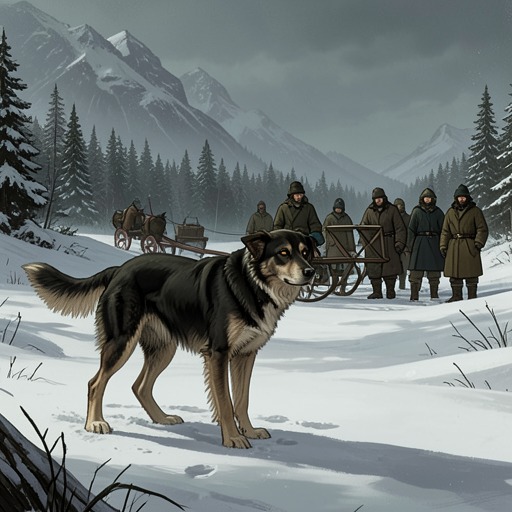
Yeehat Valley belongs to the remote northern wilderness rather than to the settled world of towns, trails, and camps. Its landscape is organized by seasonal movement: moose descend toward lower valleys before winter, while wolf packs follow their living meat. The valley therefore functions not as a static backdrop but as part of a larger animal geography, connected to forests, streams, divides, and migrating herds.
The novel’s wilderness is governed by recurring cycles of thaw, migration, hunger, and pursuit. Elsewhere, snow and ice endanger sled journeys across the Chilkoot Divide and the Thirty Mile River, while spring releases the Yukon and awakens vegetation and birds. Yeehat Valley belongs to this same unstable ecological world, where human routes eventually yield to animal trails and where survival depends on alertness, speed, and physical adaptation.
Thornton’s Death and Buck’s Mourning
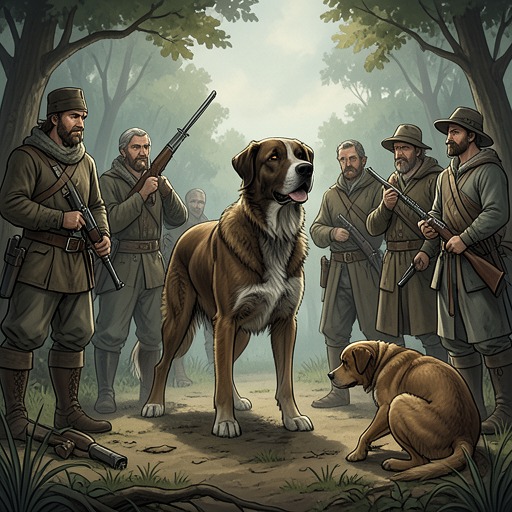
Yeehat Valley becomes the scene of the crisis that ends Buck’s human life. After the Yeehats attack the camp and John Thornton is killed, Buck remains beside the pool, brooding and moving restlessly through the camp. He understands death as a cessation of movement and knows that John Thornton is gone, but the knowledge leaves a void comparable to hunger, an ache that food cannot satisfy.
The valley also contains the visible remains of the attack. Buck contemplates the carcasses of the Yeehats and feels both grief and pride: he has killed human beings while defending the law of club and fang. Yet his pride does not erase the loss. The dead camp is the material sign that the relationship between Buck and John Thornton has ended, and the valley holds the two consequences together—mourning for the beloved master and the violent emergence of Buck’s power.
The Arrival of the Wolf Pack
Night changes the valley’s meaning. Under a full moon, Buck hears distant sharp yelps that grow steadily closer. He recognizes the sound from an older, half-remembered world, and the call reaches him more compellingly than ever. Because John Thornton is dead, the final bond tying Buck to human claims has been broken; the valley becomes the threshold through which he can answer the wild.
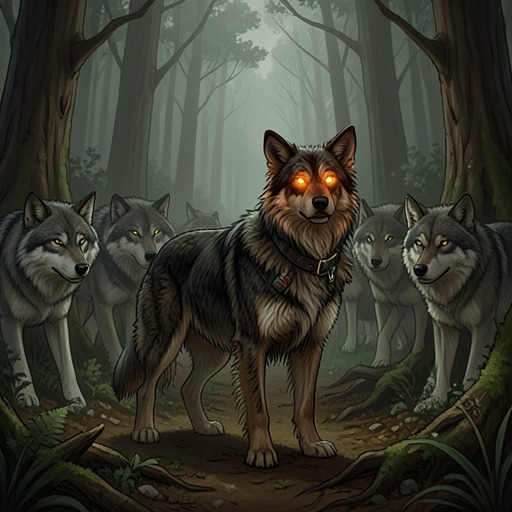
The wolf pack enters the clearing in a silvery flood while Buck waits motionless at its center. The first wolf that leaps at him is killed with a single strike, and three more retreat with slashed throats or shoulders. When the pack attacks together, Buck uses his speed and agility to keep it from reaching his back, retreating down toward the pool and creek bed until a high gravel bank protects three sides of his position. After half an hour, the wolves withdraw, exhausted and unable to defeat him.
The encounter does not end in simple domination. A long, lean gray wolf advances in a friendly manner, and Buck recognizes the wild brother with whom he once ran. They touch noses. Then an old, battle-scarred wolf approaches, and after Buck returns the greeting, the elder begins the long wolf howl. The pack joins him, and Buck answers. Once the exchange is complete, the wolves crowd around him in a mixture of friendliness and savagery before departing together. Buck runs at the head of this new movement, side by side with the wild brother.
From Human Camp to Legendary Territory
After Buck joins the pack, Yeehat Valley is no longer remembered as an ordinary camp or hunting ground. The Yeehats observe changes in the timber wolves, including animals with brown markings on the head and muzzle and a white rift down the chest. More significantly, they tell of a Ghost Dog that runs at the head of the pack, a creature more cunning than themselves that steals from camps during fierce winters, robs traps, kills dogs, and defies their bravest hunters.
The valley becomes a place of avoidance and dread. Some hunters fail to return, while others are found with their throats cruelly slashed and wolf prints around them, prints larger than those of any ordinary wolf. Each fall, when the Yeehats follow migrating moose, they refuse to enter the valley. The story of the Evil Spirit selecting it as an abiding-place turns a geographical location into a tabooed territory, marked by fear rather than ownership.
Summer Return and Narrative Significance
The valley nevertheless retains a private human meaning for Buck. In summer, when the Yeehats do not know of his visits, a great wolf crosses alone from the smiling timberland and enters the open space among the trees. A yellow stream runs from rotted moose-hide sacks into the ground, while long grass and vegetable mold conceal its color. This is the remnant of the human camp and the place where Buck pauses to remember, howling once, long and mournfully, before leaving.
Buck’s return shows that the valley is not merely the setting of his disappearance into nature. It is also the site where memory survives inside his wild identity. In winter he runs with the pack through moonlight and borealis, singing the song of the younger world; in summer he comes alone to the traces of John Thornton’s camp. Yeehat Valley thus holds the novel’s final tension: Buck has crossed beyond human society, but he has not become incapable of remembrance. The valley is simultaneously a home of wolves, a grave-marked human ruin, and the birthplace of the Ghost Dog legend.